
Understanding the Different Types of Jack Russell Terriers
Did you know there’s more than one type of Jack Russell? Though they all share a common ancestry and a lot of the same traits, there are a few distinct varieties of Jack Russell-type terriers — and the differences can be important, especially if you're considering adding one to your family. Let’s take a closer look at the three main types commonly associated with the Jack Russell name.
11/14/20242 min read
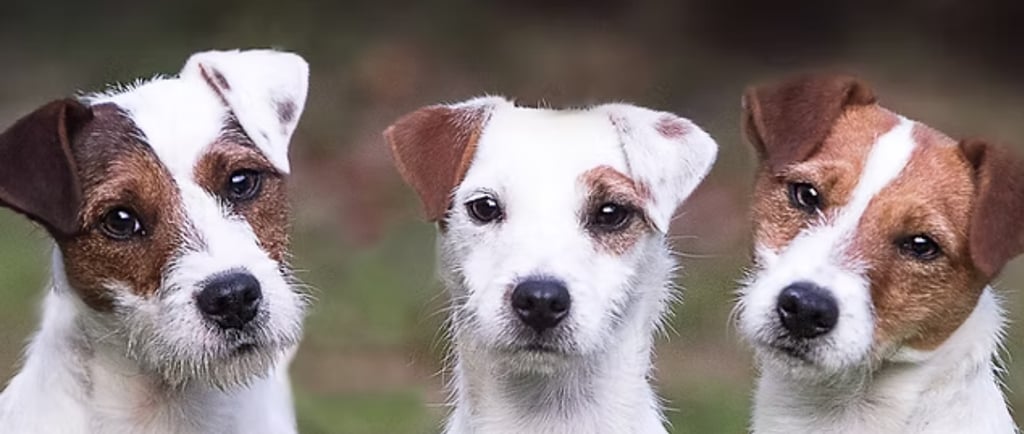
1. Jack Russell Terrier (JRT)
The Original Working Dog
The Jack Russell Terrier, often referred to simply as the “JRT,” is the original breed developed by Reverend John Russell in England in the 1800s. These dogs were bred for fox hunting — specifically to chase and flush foxes from their dens without harming them.
Height: 10–15 inches (25–38 cm)
Build: Compact, athletic, and flexible
Coat Types: Smooth, rough, or broken (a mix of both)
Tail: Traditionally docked in working lines, but often left natural today
Personality: Energetic, driven, and very intelligent
Fun Fact: The JRT is not a show ring breed — it’s a working terrier, and many enthusiasts prefer it to be judged on performance rather than appearance.
Note: In the U.S., the Jack Russell Terrier name often refers to dogs registered with the Jack Russell Terrier Club of America (JRTCA), which maintains a strong focus on the breed’s working roots.
2. Parson Russell Terrier
The Show Ring Standard
The Parson Russell Terrier is closely related to the JRT, but it has been officially recognized by kennel clubs such as the American Kennel Club (AKC) and The Kennel Club (UK) as a separate breed — with specific conformation standards for showing.
Height: 12–15 inches (30–38 cm)
Build: Taller and more square-shaped than the JRT
Coat Types: Smooth or broken
Tail: Usually left natural, carried high
Personality: Lively, alert, and athletic
While they’re still energetic and intelligent, Parson Russells are often bred more for appearance and temperament than hunting ability.
Key Difference: Parsons are usually taller and more "leggy" than their JRT cousins, with a body that fits neatly into a square shape rather than the longer rectangular frame of many Jack Russells.
3. Russell Terrier
The Smaller Companion
Sometimes called the "Shorty Jack" or English Russell Terrier, this type was developed in Australia from smaller Jack Russells imported from the UK. It has gained popularity as a companion breed and is recognized by the AKC as the Russell Terrier.
Height: 10–12 inches (25–30 cm)
Build: Shorter-legged, more rectangular in body
Coat Types: Smooth, rough, or broken
Tail: Typically natural
Personality: Friendly, outgoing, and affectionate — but still with that terrier drive
Russell Terriers have the same lively spirit and intelligence as the others but tend to be a bit more compact, making them ideal for homes with less space — though they still need plenty of exercise!
Final Woofs
Jack Russell Terriers — in all their forms — are bold, clever, and endlessly entertaining. Whether you're drawn to the traditional working lines or the more refined show standards, one thing’s for sure: life with a Jack Russell is never boring.
If you’re thinking about bringing one into your life, do your research, talk to reputable breeders or rescue groups, and be ready for a dog that will challenge you, make you laugh, and keep you on your toes.
Connect
Join our community of puppy enthusiasts.
Contact
© 2025. All rights reserved.